
MEDIA MENTIONS : DMS & DHMC IN THE NEWS
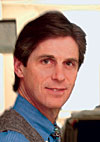 Among the people and programs coming in for
prominent media coverage in recent months
was Elliott Fisher, a professor of medicine and the lead
author of a major study on Medicare spending patterns.
"Increased Medicare spending does not necessarily
translate into superior quality of care or
improved health," said the New
York Times of Fisher's study. "On
most measures, both the quality
of care and outcomes of care
were better in the more conservative
regions," Fisher told National
Public Radio's All Things
Considered. And the Wall Street
Journal wrote: "The federal Medicare program
spends about 60% more for health care for bene-
ficiaries in White Plains, N.Y., and Detroit than
it does in Rochester, N.Y., and Grand Rapids,
Mich. . . . 'The belief that more medical care is
better is deeply entrenched in our system,' says Elliott
Fisher." See page 3 for more on his study.
Among the people and programs coming in for
prominent media coverage in recent months
was Elliott Fisher, a professor of medicine and the lead
author of a major study on Medicare spending patterns.
"Increased Medicare spending does not necessarily
translate into superior quality of care or
improved health," said the New
York Times of Fisher's study. "On
most measures, both the quality
of care and outcomes of care
were better in the more conservative
regions," Fisher told National
Public Radio's All Things
Considered. And the Wall Street
Journal wrote: "The federal Medicare program
spends about 60% more for health care for bene-
ficiaries in White Plains, N.Y., and Detroit than
it does in Rochester, N.Y., and Grand Rapids,
Mich. . . . 'The belief that more medical care is
better is deeply entrenched in our system,' says Elliott
Fisher." See page 3 for more on his study.
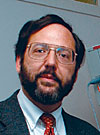 The same theme, in a different patient population,
was the subject of a story by the European
wire service Reuters: "When it comes to having
doctors who specialize in the medical problems of
premature infants, a new study
suggests that more is not necessarily
better. A research team
from Dartmouth found that premature
babies were just as likely
to survive in regions of the
United States where the number
of specialists and special
neonatal care units was below average, compared
to regions where the number was high." The article
quoted researcher David Goodman, M.D., as saying,
"It's possible that babies can be harmed if they are
subjected to too much specialized care." See the
Fall 2002 issue for more on this study.
The same theme, in a different patient population,
was the subject of a story by the European
wire service Reuters: "When it comes to having
doctors who specialize in the medical problems of
premature infants, a new study
suggests that more is not necessarily
better. A research team
from Dartmouth found that premature
babies were just as likely
to survive in regions of the
United States where the number
of specialists and special
neonatal care units was below average, compared
to regions where the number was high." The article
quoted researcher David Goodman, M.D., as saying,
"It's possible that babies can be harmed if they are
subjected to too much specialized care." See the
Fall 2002 issue for more on this study.
An Atlantic Monthly feature quoted DMS's pioneering outcomes researcher: "'There is a certain level of care that helps you live as long and as well as possible,' says Dr. John Wennberg, director of the Center for the Evaluative Clinical Sciences at Dartmouth Medical School. 'Then there's excess care, which not only doesn't help you live longer but may shorten your life or make it worse.'"
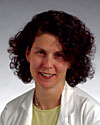 Parenting magazine, in an article about what
makes for a rewarding birth experience, addressed
the decline in vaginal births after cesareans, or
VBACs: "Many medical experts
are concerned that women
aren't offered the option of a
VBAC as often as they should
be. 'Three out of four women
who've had a prior C-section
could probably deliver vaginally.
Yet doctors and hospitals are
eliminating this option because of a lack of clear
national guidelines and the threat of malpractice,'
says Michele Lauria, M.D., an associate professor of obstetrics
and gynecology at Dartmouth. . . . 'Women
should have a choice about VBACs.'"
Parenting magazine, in an article about what
makes for a rewarding birth experience, addressed
the decline in vaginal births after cesareans, or
VBACs: "Many medical experts
are concerned that women
aren't offered the option of a
VBAC as often as they should
be. 'Three out of four women
who've had a prior C-section
could probably deliver vaginally.
Yet doctors and hospitals are
eliminating this option because of a lack of clear
national guidelines and the threat of malpractice,'
says Michele Lauria, M.D., an associate professor of obstetrics
and gynecology at Dartmouth. . . . 'Women
should have a choice about VBACs.'"
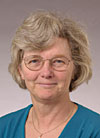 Another aspect of motherhood was the subject of
a feature in the Dallas Morning News. "An estimated
20 percent of women will experience depression
sometime in life—disproportionately
in the childbearing
years. And the disease
underlies many of the problems
families struggle with in their
children, says Dr. Ardis Olson, a professor
of pediatrics at Dartmouth.
'Mothers who are depressed
report more child behavior problems in
the first year of life, they report more difficulty
connecting to their children . . .,' she says. Depressed
mothers are also less likely to read to their
children, to discipline them consistently, and to
protect their health and safety with measures such
as seat belts, Dr. Olson says."
Another aspect of motherhood was the subject of
a feature in the Dallas Morning News. "An estimated
20 percent of women will experience depression
sometime in life—disproportionately
in the childbearing
years. And the disease
underlies many of the problems
families struggle with in their
children, says Dr. Ardis Olson, a professor
of pediatrics at Dartmouth.
'Mothers who are depressed
report more child behavior problems in
the first year of life, they report more difficulty
connecting to their children . . .,' she says. Depressed
mothers are also less likely to read to their
children, to discipline them consistently, and to
protect their health and safety with measures such
as seat belts, Dr. Olson says."
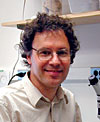 A front-page story in the New York Times science
section focused on new findings about RNA's role
in the cell. "Some genes, scientists found, produce
tiny RNAs, known as micro-
RNAs. . . . The first such micro-
RNA was discovered in the early
1990s by Dr. Victor Ambros and
his colleagues at Dartmouth. Because
the finding was so unexpected,
'there was a considerable
amount of legitimate doubt,'
Dr. Ambros recalled." See page 6 in this issue
for evidence that there is no longer any doubt.
A front-page story in the New York Times science
section focused on new findings about RNA's role
in the cell. "Some genes, scientists found, produce
tiny RNAs, known as micro-
RNAs. . . . The first such micro-
RNA was discovered in the early
1990s by Dr. Victor Ambros and
his colleagues at Dartmouth. Because
the finding was so unexpected,
'there was a considerable
amount of legitimate doubt,'
Dr. Ambros recalled." See page 6 in this issue
for evidence that there is no longer any doubt.
A DMS expert on the safety of the blood supply was quoted recently in the Wall Street Journal: " 'Two-thirds of the [transfusion] problems take place at the bedside,' says Dr. James AuBuchon, who runs the blood bank at Dartmouth." And in the Atlanta Journal- Constitution: "Self-donation dropped in the '90s as the public gained more confidence in the blood supply, said Dr. James AuBuchon." See page 26 for more on the subject.
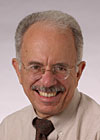 The Boston Globe took a look at "the infamous
Oedipal complex," saying experts now
advise against reading too
much into children's behavior.
"The danger . . . is
that by overreacting, we
shame our sons. 'That can
deprive them of a chance
to grow emotionally,' says
child and adolescent psychiatrist
Dr. Robert Racusin of Dartmouth. . . .
For those moments that do look like sexualized
behavior toward mom or jealousy toward
dad, Racusin tells parents to deconstruct
it: 'Why would he be jealous? Does he
really want to see his father displaced, or is
it more likely that he's looking to fulfill the
innate human need to have connection?'"
The Boston Globe took a look at "the infamous
Oedipal complex," saying experts now
advise against reading too
much into children's behavior.
"The danger . . . is
that by overreacting, we
shame our sons. 'That can
deprive them of a chance
to grow emotionally,' says
child and adolescent psychiatrist
Dr. Robert Racusin of Dartmouth. . . .
For those moments that do look like sexualized
behavior toward mom or jealousy toward
dad, Racusin tells parents to deconstruct
it: 'Why would he be jealous? Does he
really want to see his father displaced, or is
it more likely that he's looking to fulfill the
innate human need to have connection?'"
 The New York Times got expert commentary
on a new online alcohol-education program
aimed at college students. "'Having some
sort of basic way of educating
students about alcohol
makes a lot of
sense,' said Dr. Jack Turco, director
of health services at
Dartmouth College [and
an associate professor of
medicine at DMS]. But
with an incoming class of 1,100 students,
'it's next to impossible to get individual
classes and enough people to teach them.'"
The New York Times got expert commentary
on a new online alcohol-education program
aimed at college students. "'Having some
sort of basic way of educating
students about alcohol
makes a lot of
sense,' said Dr. Jack Turco, director
of health services at
Dartmouth College [and
an associate professor of
medicine at DMS]. But
with an incoming class of 1,100 students,
'it's next to impossible to get individual
classes and enough people to teach them.'"
The New York Times recently focused on "what some patients call 'chemo brain,'" citing growing evidence that "chemotherapy can, in some cases, cause problems with memory and concentration. . . . Dr. Tim Ahles, a psychologist at Dartmouth, said, 'Part of the reason that this whole issue is coming more to the fore now is that we're seeing increasing numbers of long-term cancer survivors who are wanting to get back to their routines, so increasing numbers of people are having problems.'"
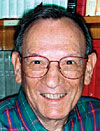 The world is still beating a path to the door
of Dr. Heinz Valtin, almost a year after word
leaked out that he had debunked the dictum
to drink eight 8-ounce glasses of water
a day. Noted Reader's Digest: "There's no
proof we all need to drink '8x8'—eight 8-
ounce glasses of water—each day, according
to Dartmouth Medical School physiologist
Heinz Valtin." Reported Health magazine:
"Valtin says that cotton-mouthed feeling
generally kicks in before your body gets significantly
dehydrated." And The Guardian
of London got Valtin to reveal
his own drinking
habits: "The two-litres-aday
mantra has recently
been challenged by a number
of respectable sources.
Professor Heinz Valtin
(who drinks just one glass
of plain water a day, plus about five glasses of
juice, coffee, milk, and other fluids), is a kidney
specialist at Dartmouth Medical School
in America." See the Fall 2002 issue for
more about Valtin's conclusions.
The world is still beating a path to the door
of Dr. Heinz Valtin, almost a year after word
leaked out that he had debunked the dictum
to drink eight 8-ounce glasses of water
a day. Noted Reader's Digest: "There's no
proof we all need to drink '8x8'—eight 8-
ounce glasses of water—each day, according
to Dartmouth Medical School physiologist
Heinz Valtin." Reported Health magazine:
"Valtin says that cotton-mouthed feeling
generally kicks in before your body gets significantly
dehydrated." And The Guardian
of London got Valtin to reveal
his own drinking
habits: "The two-litres-aday
mantra has recently
been challenged by a number
of respectable sources.
Professor Heinz Valtin
(who drinks just one glass
of plain water a day, plus about five glasses of
juice, coffee, milk, and other fluids), is a kidney
specialist at Dartmouth Medical School
in America." See the Fall 2002 issue for
more about Valtin's conclusions.
The media turned for commentary on January's space shuttle tragedy to two Dartmouth faculty members. Jay Buckey, M.D., an associate professor of medicine and a former astronaut, shared the perspective of someone who'd flown on Columbia in a New York Times op-ed essay: "It is important to remember that the Columbia crew ventured into space for a purpose, to do experiments needed for long-duration space flights." And the Psychology Today Web site speculated about the state of mind of the three astronauts on the international space station: "'They knew they might experience a serious personal loss while in space, and they accept that,' says James Carter, Ph.D., of Dartmouth Medical School. . . . Even so, NASA is concerned about the psychological rami- fications of long-duration missions—such as a possible trip to Mars. Carter is now working with NASA in developing virtual reality therapy for astronauts." See the Winter 2002 issue for more about that project.
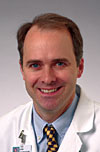 "How safe is your hospital?" was a recent
headline in Consumer Reports. The magazine
known for its ratings of washing machines
and cars didn't rank
hospitals but did offer advice
on how to determine
the quality of a given hospital:
"The amount of experience
a hospital or doctor
has with a particular
health condition seems to
play a key role in the quality of care delivered.
A 2002 study headed by John Birkmeyer,
M.D., chief of general surgery at Dartmouth-
Hitchcock Medical Center, found that the
risk of death following surgery for pancreatic
cancer—an especially difficult operation
—is 360% greater at the lowest-volume hospitals
than at the highest-volume ones."
"How safe is your hospital?" was a recent
headline in Consumer Reports. The magazine
known for its ratings of washing machines
and cars didn't rank
hospitals but did offer advice
on how to determine
the quality of a given hospital:
"The amount of experience
a hospital or doctor
has with a particular
health condition seems to
play a key role in the quality of care delivered.
A 2002 study headed by John Birkmeyer,
M.D., chief of general surgery at Dartmouth-
Hitchcock Medical Center, found that the
risk of death following surgery for pancreatic
cancer—an especially difficult operation
—is 360% greater at the lowest-volume hospitals
than at the highest-volume ones."
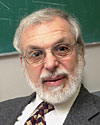 The possibility that within a decade there
may be a "morning-after pill" to prevent
post-traumatic stress disorder was reported
in the Milwaukee Journal-Sentinel. Researchers
have focused on
the naturally occurring
brain chemical neuropeptide
Y, which "helps buffer
the effects of stress and
anxiety. 'If we could somehow
bottle it or train people
to mobilize their own
neuropeptide Y, that would be great primary
prevention,' said Dr. Matthew Friedman, speaking
at the American Association for the Advancement
of Science's annual meeting in
Denver." See the Winter 2001 issue for a
profile of Friedman, who is a professor of psychiatry
and of pharmacology at DMS.
The possibility that within a decade there
may be a "morning-after pill" to prevent
post-traumatic stress disorder was reported
in the Milwaukee Journal-Sentinel. Researchers
have focused on
the naturally occurring
brain chemical neuropeptide
Y, which "helps buffer
the effects of stress and
anxiety. 'If we could somehow
bottle it or train people
to mobilize their own
neuropeptide Y, that would be great primary
prevention,' said Dr. Matthew Friedman, speaking
at the American Association for the Advancement
of Science's annual meeting in
Denver." See the Winter 2001 issue for a
profile of Friedman, who is a professor of psychiatry
and of pharmacology at DMS.
If you would like to offer any feedback about this article, we would welcome getting your comments at DartMed@Dartmouth.edu.